






VW Repairs
VW Transporter Problems: T5 Camshaft, DSG & EGR Cooler

12 min read

The Transporter does not retire in South Africa. It gets converted — shuttle van to tour bus to builder’s van to camper — and it keeps working long after the warranty is a memory. That long life is exactly why the used-parts trade around it is so healthy, and why it pays to know which faults are an annoyance and which ones end engines.
This guide covers the T4, T5 and T6 vans sold here, and applies to the Caravelle and Kombi too where the fault is shared. Where we have a genuine South African price we have given it. Where we do not, we have said so rather than converting an overseas figure into rands and hoping.
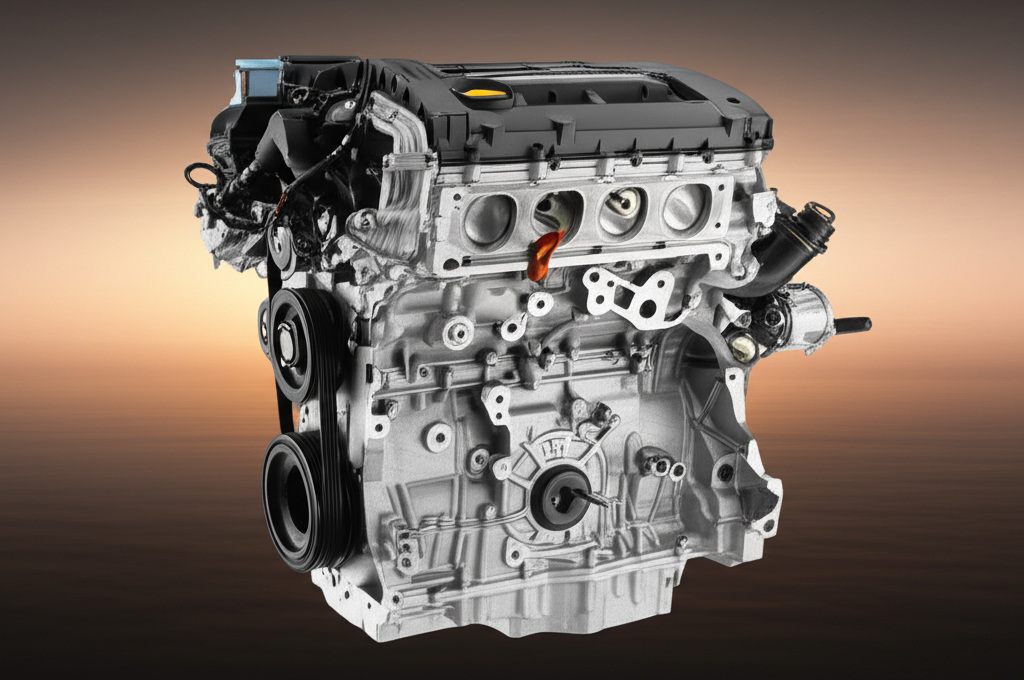
The 2.0 BiTDI EGR cooler that destroys engines
If you take one thing from this page, take this one.
On the 2.0 BiTDI (CFC and CFCA) the EGR cooler’s cooling fins are aluminium. They corrode, oxidise and crumble, and the fragments are carried by the exhaust gas recirculation system straight into the cylinders. Once inside, that debris acts like sandpaper on the bore walls, pistons and rings — and then circulates through the oil to everything else the oil touches.
The symptom order matters, because it is not what people expect:
- Heavy oil consumption — usually the first sign, and often the only sign before the damage is done
- Coolant loss or overheating, if the cooler also cracks
- Low oil pressure at idle as wear progresses
- DPF regenerating far more often than it should, because the engine is burning oil
- Turbocharger failure — a consequence, not the cause, as debris reaches it through the oil
- Engine seizure
An improved cooler was introduced in March 2015. Better still, you can ask about the specific part: the failing coolers are 03L 115 512A and 03L 115 512C, and revisions A, B and C are all known to fail. Revision D is the acceptable one, provided it was fitted before the damage started.
That turns “avoid the BiTDI” into a question you can actually put to a seller: which revision cooler is on it, and when was it fitted?
Caught it too late?
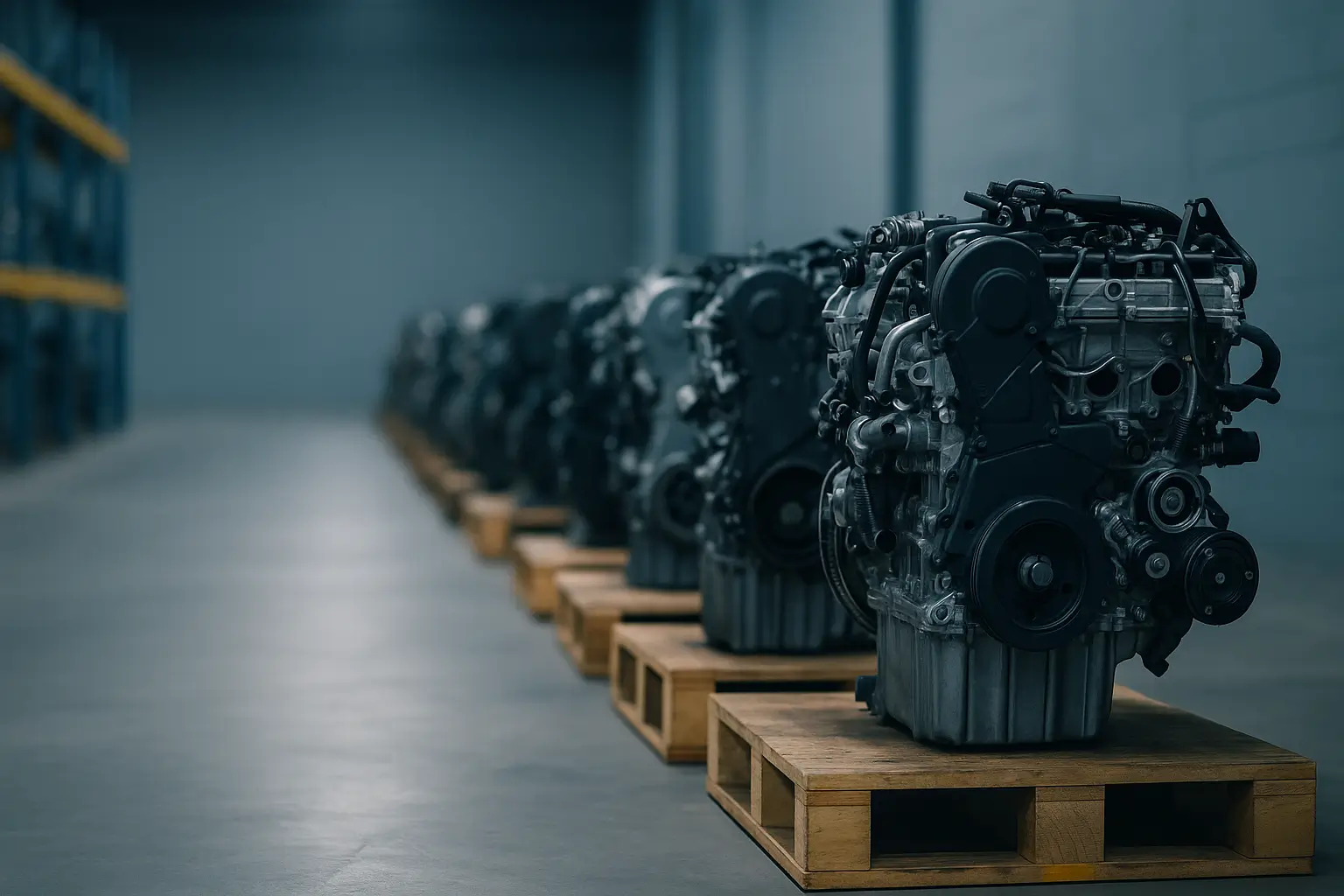
Used and tested 2.0 BiTDI and 2.0 TDI Transporter engines, plus EGR coolers and turbochargers for T5.1 and T6 vans. Send us your engine code and mileage and we will tell you what we have.
Get a price →2.5 R5 TDI “injector problems” — work cheapest first
This is the section that will save you the most money, because four different faults produce almost identical symptoms and the cost gap between them is enormous.
Owners search for Transporter injector problems and describe a misfire, rough idle, smoke, hard starting and poor economy. The 2.5 R5 TDI is a Pumpe Düse engine, so the camshaft directly actuates the unit injectors — which means a camshaft fault presents as an injector fault. But before you get anywhere near a camshaft, there are two cheaper suspects.
Work down this list in order:
- Injector wiring loom. It runs under the rocker cover, cooking in oil through constant heat cycling, and the connections fracture. The signature is unmistakable once you know it: a misfire that appears after about 45 minutes of running and clears once the engine cools. Owners call it the famous injector loom fault. It mimics a dead injector perfectly, which is exactly why people replace injectors and still have the problem.
- Injector seals. A black, tarry carbon crust around one injector on the valve cover, usually with a diesel smell.
- The injectors themselves. Have them back-leak tested by a diesel injection specialist rather than replacing a full set on suspicion.
- Cam followers and camshaft. A popping sound through the airbox that develops into a dull thud, plus ticking from the top of the engine. Worn lobes show flat spots or polishing where the hardened surface has gone.
One straight piece of advice on the loom: buy that one new, not used. A loom off a donor van has spent the same number of years cooking under a rocker cover as yours has. It is the one part in this section where a second-hand item makes no sense, and we will tell you so rather than sell you one. The part number is 070971033 and it fits AXD, AXE, BNZ, BPC and BLJ.
If it does come down to the camshaft, a proper repair is a new camshaft, new followers and a new rocker assembly — again, not used parts.
Injectors, seals or a camshaft?
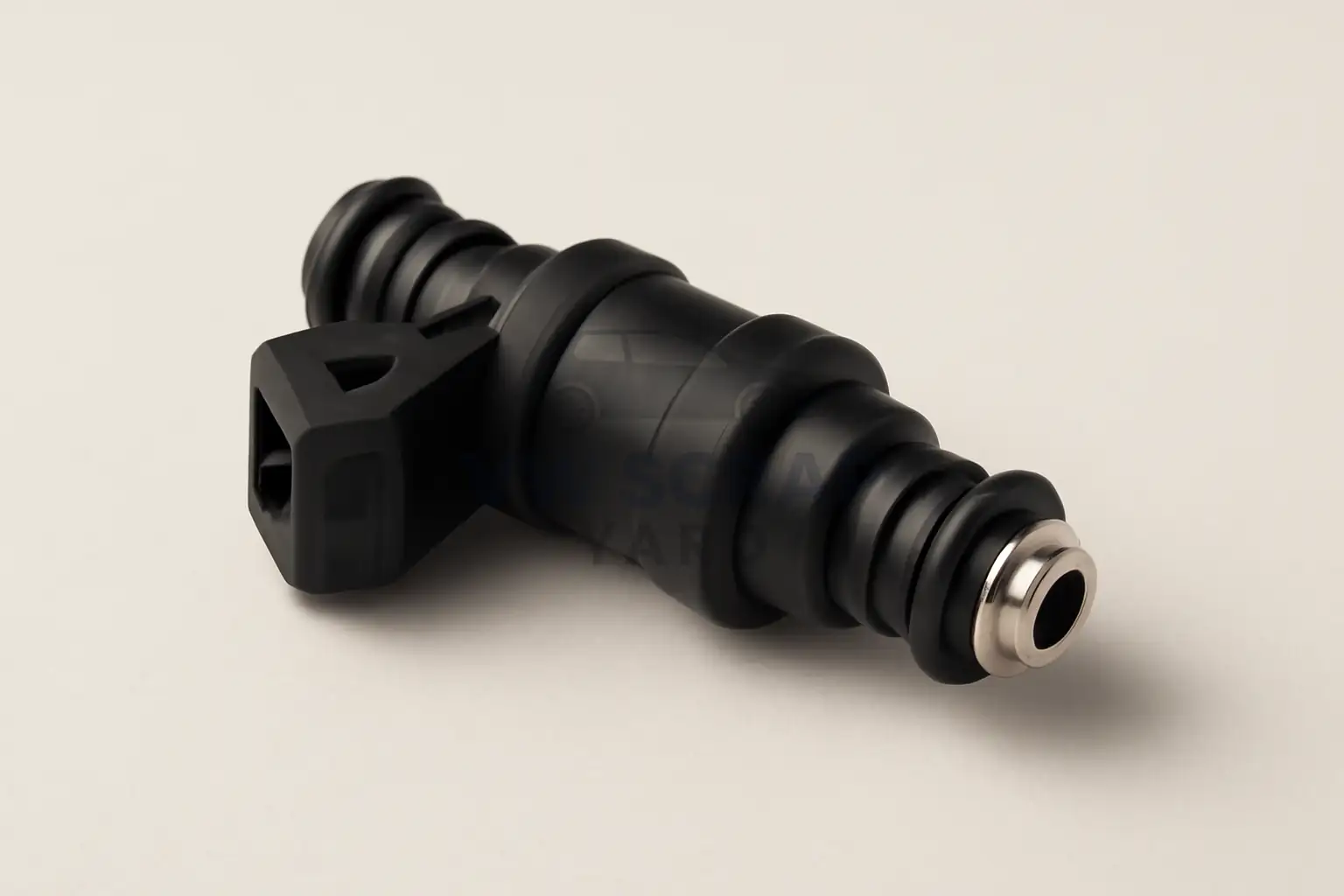
Unit injectors, injector seals, rocker assemblies and complete cylinder heads for the 2.5 R5 TDI — AXD, AXE, BNZ and BPC. Tell us what you found under the valve cover and we will quote the right part.
Get a price →When the oil level goes UP: injectors loose in the head
This one is separate from the running faults above, and it has a tell so distinctive it is worth checking on any 2.5 R5 TDI you are considering.
The cylinder head is aluminium and the unit injectors are clamped on one side only. Vibration gradually works them into the soft alloy, the bores go oval, and the sealing rings no longer sit where they need to. Once the seals let go, fuel pressure drops and diesel runs down the injector bore into the sump.
Which means the oil level rises instead of falling — and that rising level is the single most useful early warning on this engine.
Other signs: hard starting after the van has stood, but fine when warm — classically worse when it is parked nose-up. Lumpy idle. A diesel smell in the oil. In the worst documented cases, a runaway engine, where the van revs uncontrollably on its own diluted sump oil.
The severe end of the same story is a crack. Owners and a dealership technical advisor have independently traced hard starting and diesel-in-oil to a hairline crack inside the number three injector bore, linking the fuel gallery to an oil gallery. Number three comes up repeatedly.
If the head is genuinely cracked, or the bores are too far gone, it does need replacing. The useful thing for a South African buyer is that this head is shared with the Touareg and Phaeton, so the local donor pool is wider than you would expect.
Bores gone, or genuinely cracked?
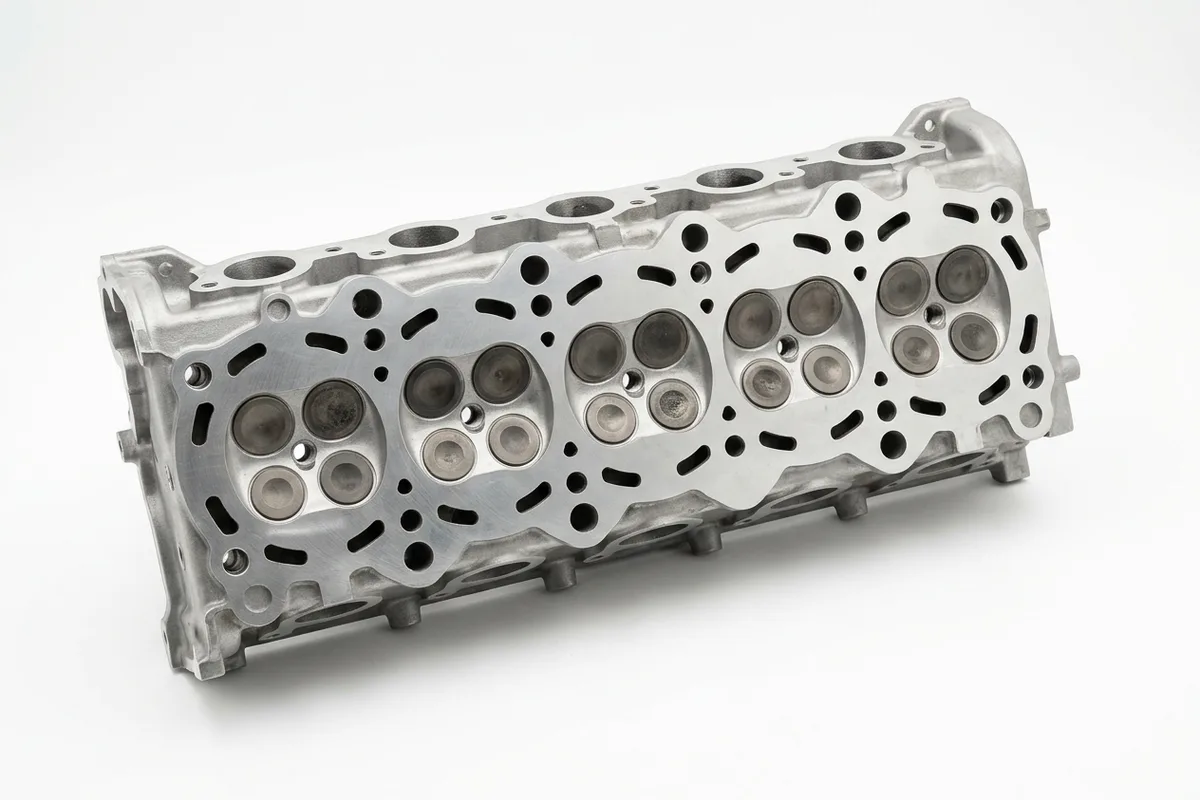
Used 2.5 R5 TDI cylinder heads for AXD, AXE, BNZ and BPC — the same casting used on the Touareg and Phaeton, so we see more of them than you would think. Send us your engine code.
Get a price →Judder pulling away: the dual-mass flywheel
Judder as you pull away, worst when cold and worst in first or reverse. A rattle at idle that disappears as the revs rise. A thump through the clutch pedal. That is the dual-mass flywheel, and it is the single most-expected mechanical failure on this van.
It is worth being clear that this is wear, not a defect. The flywheel exists to damp torsional vibration between the engine and the gearbox, and on a heavy, high-torque van used in stop-start traffic it wears out. Our burnt-out clutch guide covers how to tell clutch wear from flywheel wear if you are not sure which you are looking at.
Replace the flywheel and clutch together, with a new release bearing. The gearbox has to come out either way, so splitting the jobs means paying for the strip-down twice.
South African price: a clutch kit with dual-mass flywheel for the Transporter 2.0 TDI was listed locally at around R11 000 for the parts, with labour on top.
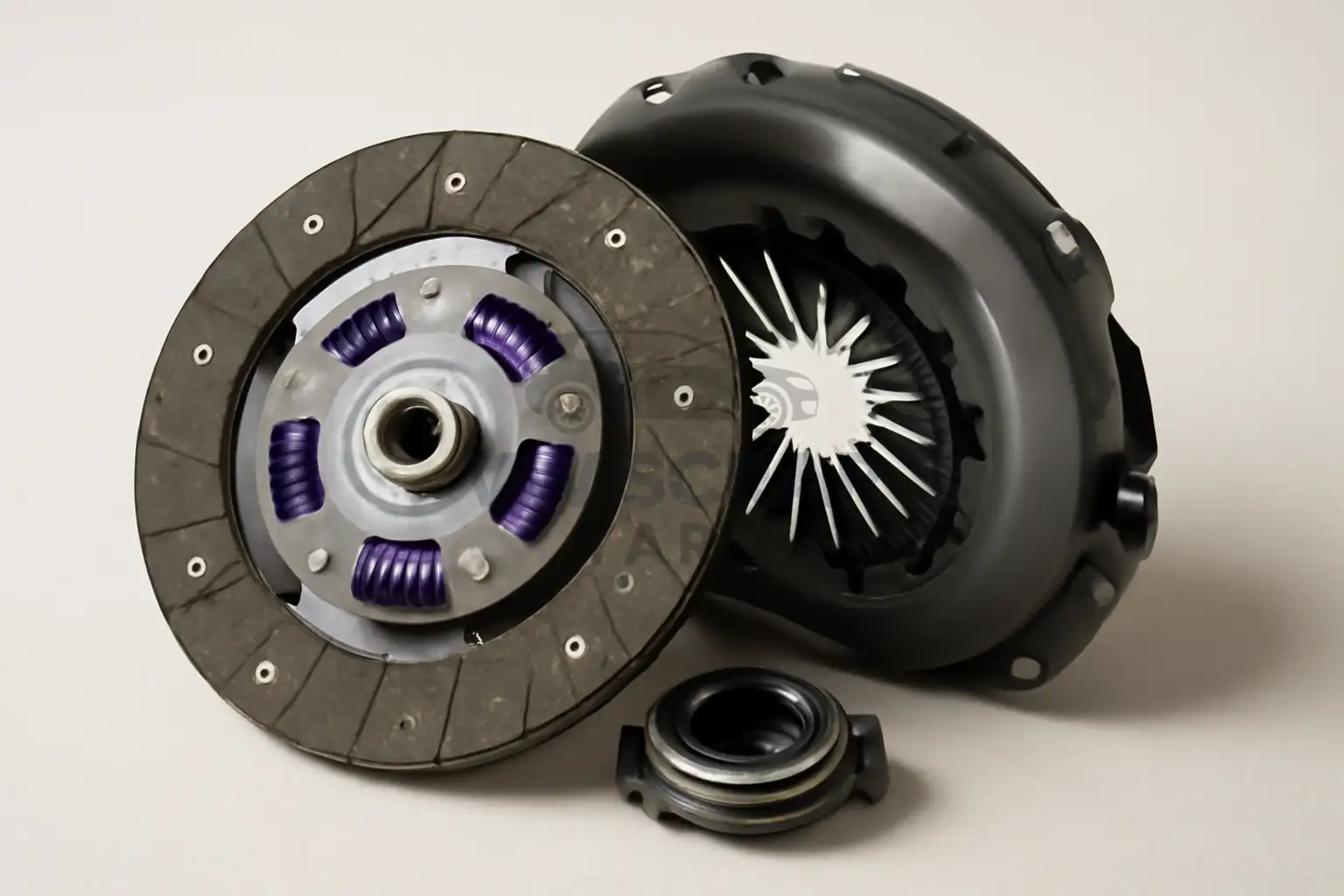
Flywheel and clutch as one job
Dual-mass flywheels, clutch kits, release bearings and slave cylinders for T5, T5.1 and T6 Transporters in 2.5 TDI, 2.0 TDI and BiTDI. Tell us the engine code and we will match the set.
Get a price →DSG (DQ500) mechatronic faults
The DQ500 is the seven-speed wet-clutch DSG fitted to the T5.1, T6 and T6.1 — a box built for high torque. The mechatronic unit is the hydro-electric assembly that controls the wet clutches and gear selection, and it degrades internally over time.
Symptoms are harsh, jerky or delayed shifts, losing the odd gears (1, 3, 5) or the even gears (2, 4, 6), sudden limp mode with only a few gears available, or complete loss of drive. Fault codes P0607 and P175D are common, as are P173500 and P173600 for the clutch 1 and clutch 2 position senders.
We are not going to publish a rand figure for this one. The only South African pricing we could find sits inside our own network, which is not independent evidence, and quoting it here would be presenting our own number as market research. Phone two gearbox specialists.
You can see what we currently carry on our DSG gearboxes page.
ABS module failure on the T5
ABS and traction control lights permanently on. On earlier T5s specifically, a flashing handbrake light, a speedometer that stops working and an erratic fuel gauge — all at once, all from the same fault. Sometimes a diagnostic tool cannot talk to the module at all, which makes it look like wiring when it is not.
The MK25 pump-and-module unit fails internally. VW updated the pump at the 2009 facelift, but both versions fail in a similar way, so a T5.1 is not immune. It is the same unit that fails on the Touareg — our Touareg problems guide covers it from that side.
Rule out the cheap causes first. Wheel speed sensors and water-damaged loom wiring are common and far less expensive. If the module itself has gone, specialist remanufacture of your own unit avoids the coding step.
Turbo actuator sticking and limp mode
The van stumbles and drops into limp mode under load — overtaking, or halfway up a long climb — with an obvious loss of power and the glow plug light flashing. Switch off, restart, and it clears. Then it comes back, more often each time.
The variable-geometry turbo’s vanes, the lever that moves them or the actuator itself clog with soot and stick. Once the vanes are stuck the ECU cannot control boost, sees over- or under-boost, and protects the engine by going into limp mode. Fault code 16408 — “actuator module for turbocharger 1: stuck” — is the giveaway.
Front suspension wear
Knocking or rattling from the front over bumps, vague steering, excessive body roll, uneven tyre wear. This is honest wear rather than a design defect, but it earns a place here because of how these vans are used in South Africa — heavy, usually loaded, over surfaces that punish lower arm bushes, balljoints and anti-roll bar links.
Replace in pairs rather than one side at a time; if one lower arm bush has gone, the other has done identical mileage under identical load. Do the anti-roll bar links and bushes at the same time, since they are cheap and the labour overlaps. Have the geometry set afterwards.
Water in the cab, and what it kills
Damp carpet in a footwell, often smelled before it is found. Then central locking stops working, lights do not come on, and windows work intermittently.
There are two evidenced routes. T5 windows are a recognised leak point unless the drain holes are kept clear — blocked drains back water up and it finds its way inside. And the central locking and lighting control box sits under the driver’s seat, exactly where that water ends up.
Which years should you avoid?
We are not going to give you a year-by-year table, because there isn’t honest data to build one from. The Transporter was never sold in North America, so there is no complaint database behind it the way there is for other models, and the “years to avoid” lists that dominate this search contradict each other outright.
What is worth knowing is engine-specific:
- Pre-facelift 2.5 R5 TDI — check for camshaft and follower wear. Listen from cold.
- 2.0 BiTDI before March 2015 — check oil consumption. The improved EGR cooler came in at that point.
- Any DSG van — have it scanned, and drive it from properly cold.
Getting the parts
Most of these repairs share a pattern: the labour costs more than the component. That is where a good used part earns its place — DSG mechatronic units, ABS modules, turbochargers, suspension arms, control boxes, doors and body panels all come off the Transporters we strip and all move.
Complete engines are there too when an EGR cooler has already done its damage — see what we carry on our used engines page.
The one exception, and we will say it plainly: the 2.5 R5 TDI camshaft repair wants a new camshaft and new followers. Fitting used ones to a worn engine buys you the same fault again, and we would rather tell you that than sell you the part.
Frequently asked questions
What are the most common VW Transporter problems?
What causes VW Transporter injector problems?
Why does my VW Transporter judder when pulling away?
How much does a Transporter clutch and flywheel cost in South Africa?
Is the VW Transporter T5 reliable?
What is the EGR cooler problem on the 2.0 BiTDI Transporter?
Which VW Transporter years should I avoid?
Why is my Transporter losing power and going into limp mode?
Why has my Transporter central locking and speedo stopped working?
Are used Transporter parts worth buying in South Africa?
Parts we strip for this job
If this guide has pointed you at a part, these are the pages worth a look. Not sure which one you need? Send us the details and we will work it out with you.