

VW Repairs
VW Touareg Problems: Air Suspension, Chain & Propshaft

11 min read
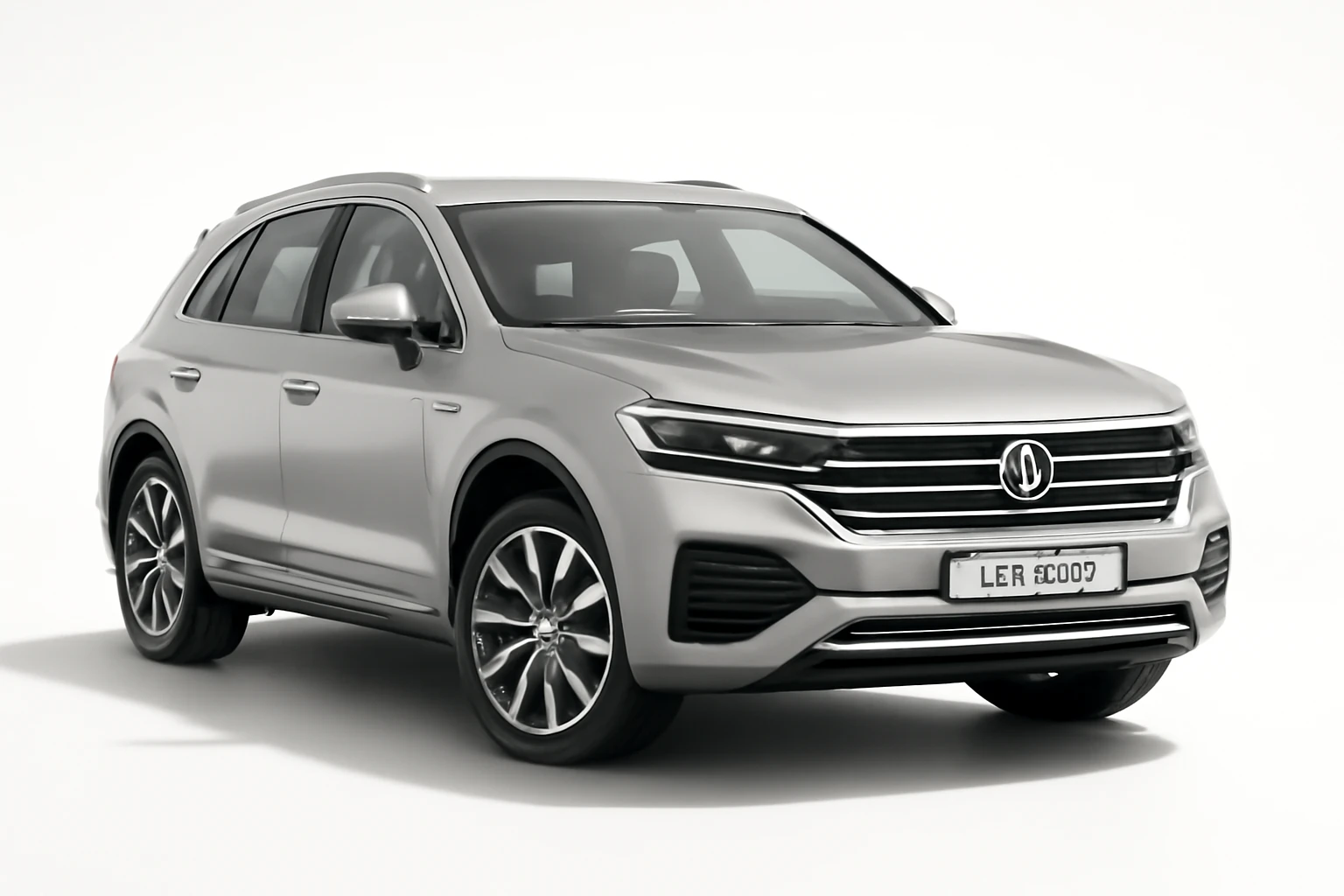
The Touareg is one of the better-built things Volkswagen has sold in South Africa. It shares a platform with the Porsche Cayenne and the Audi Q7, it will tow properly, and the 3.0 V6 TDI will cover serious distance. It is also a car where a handful of specific failures cost real money — and where the difference between a bargain and a disaster is whether the previous owner dealt with them.
This guide covers what actually goes wrong on the Mk1 (7L, 2003-2010) and Mk2 (7P, 2011-2018) cars sold here, roughly in the order you are likely to meet them. Where we have a South African price we have given it. Where we do not, we have said so rather than converting an overseas figure and passing it off as local.
Air suspension: the fault that defines the Touareg
If you ask any workshop what goes wrong with a Touareg, this is the answer. It is also the reason a lot of otherwise sound cars sit on classified sites for months.
The car sags overnight
You come out in the morning and the car is sitting on its bump stops, or one corner is visibly down. There may be an audible hiss from a wheel arch. The ride goes crashy on the affected corner, and the dash throws a suspension warning with ride-height selection unavailable.
The cause is usually the rubber bellows on an air strut perishing and splitting, or the aluminium retainer that crimps the bladder to the strut body cracking and letting go. South African conditions are not kind to twenty-year-old rubber — heat, sun, dust and rough surfaces all shorten its life.
The compressor burns out
The compressor is almost never the root cause — it is the victim. A leak somewhere in the system makes it run far more than it was designed to, and it overheats and wears out. That matters enormously, because fitting a new compressor without finding the leak will simply kill the new one too.
Remanufacturers also flag the compressor relay burning and melting, which is why the relay should be replaced at the same time as the compressor rather than reused.
Video: how VAG air suspension works — and how to diagnose it
Matthew Hayward, a VW Group master technician at Opus IVS, walks through how the air suspension system operates and how to diagnose and calibrate it. Worth ten minutes before you authorise any parts.
What it costs in South Africa
These are the published 2026 figures from a Johannesburg air suspension specialist that lists the Touareg by name:
| Part | SA price range |
|---|---|
| Compressor | R4 500 – R15 000 |
| Air strut / shock (each) | R6 000 – R18 000 |
| Airbags / bellows only | R2 500 – R7 000 |
| Valve block | R3 500 – R8 000 |
| Height sensors | R1 500 – R4 000 |
| Labour | R1 500 – R5 000 |
Used and reconditioned units sit at the bottom of those ranges or below, which is why a used air suspension compressor is one of the more sensible second-hand buys on this car.
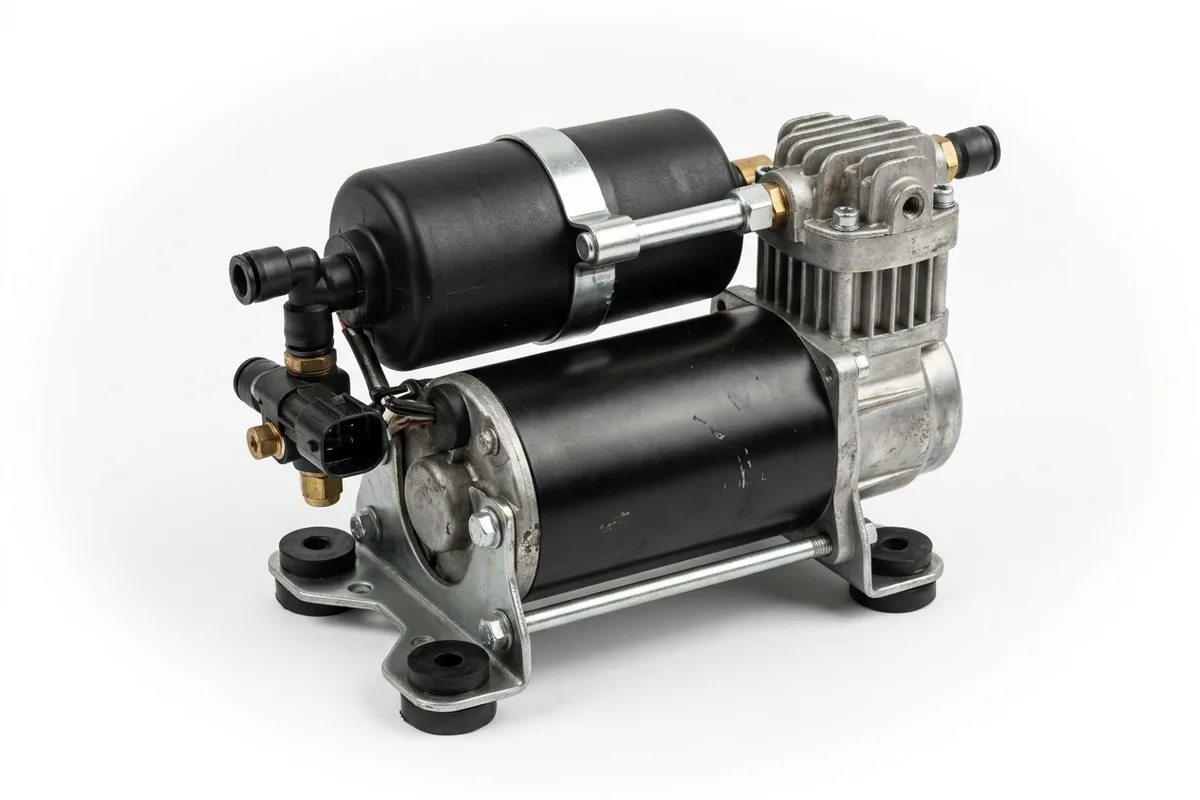
Compressor, strut, or the whole corner?
Used and tested air suspension compressors, air struts, valve blocks and height sensors for the Mk1 7L and Mk2 7P Touareg. Tell us which corner is dropping and we will match the part.
Get a price →3.0 V6 TDI timing chain and tensioners
A distinct rattle for one to three seconds on cold start-up is the tell, and it is very often dismissed as normal. It is not. The hydraulic tensioner loses its ability to keep the chain taut — an O-ring dries out and bleeds pressure when cold, letting the chain slap before oil pressure builds. Left alone the rattle becomes more frequent, then the chain stretches far enough to shift valve timing, and you get rough running, misfires and camshaft correlation fault codes.
We could not source a current South African labour quote for this job, so we are not going to invent a total. Phone two VW and Audi diesel specialists before you commit. If you are shopping for a car, treat a documented chain history as worth real money on the asking price.
The same 3.0 V6 TDI architecture appears elsewhere in the range, and several of these faults overlap — our VW Amarok V6 guide covers the shared ground from the bakkie’s side.
Coolant disappearing with no puddle
Repeated low-coolant warnings and nothing on the driveway. This is one of the most misdiagnosed Touareg faults on the market.
The oil cooler sits in the V of the engine, under the intake manifold, and its seals and O-rings harden and leak with age. There are at least four candidate leak points down there — the oil cooler seals, the flange between the high-pressure fuel pump and the oil cooler, the thermostat housing, and the EGR cooler. You cannot see any of it without a camera or stripping the manifold.
Two things make this nasty. A workshop pressure test done cold can pass while the engine still leaks hot, because the crack only opens as the metal expands. And if the EGR cooler is leaking internally, the coolant is drawn into the intake and burned — so nothing ever reaches the ground.
Propshaft centre support bearing
A vibration through the centre console under acceleration that gets steadily worse, then turns into a clunk or a repeated knock from under the middle of the car. The rubber carrier supporting the propshaft’s centre bearing perishes and tears, and once it lets go the shaft is no longer properly located and starts hammering.
The important thing here is the repair route. A dealer will typically only supply a complete new propshaft. A propshaft specialist will press in a new bearing and carrier for a fraction of that, provided the shaft itself has not been damaged by running loose for too long — which is a good reason not to ignore the vibration for a year.
We found only one South African price for this work and it dates to 2010, which is far too old to publish as a current figure. Get a live quote from a local propshaft shop.
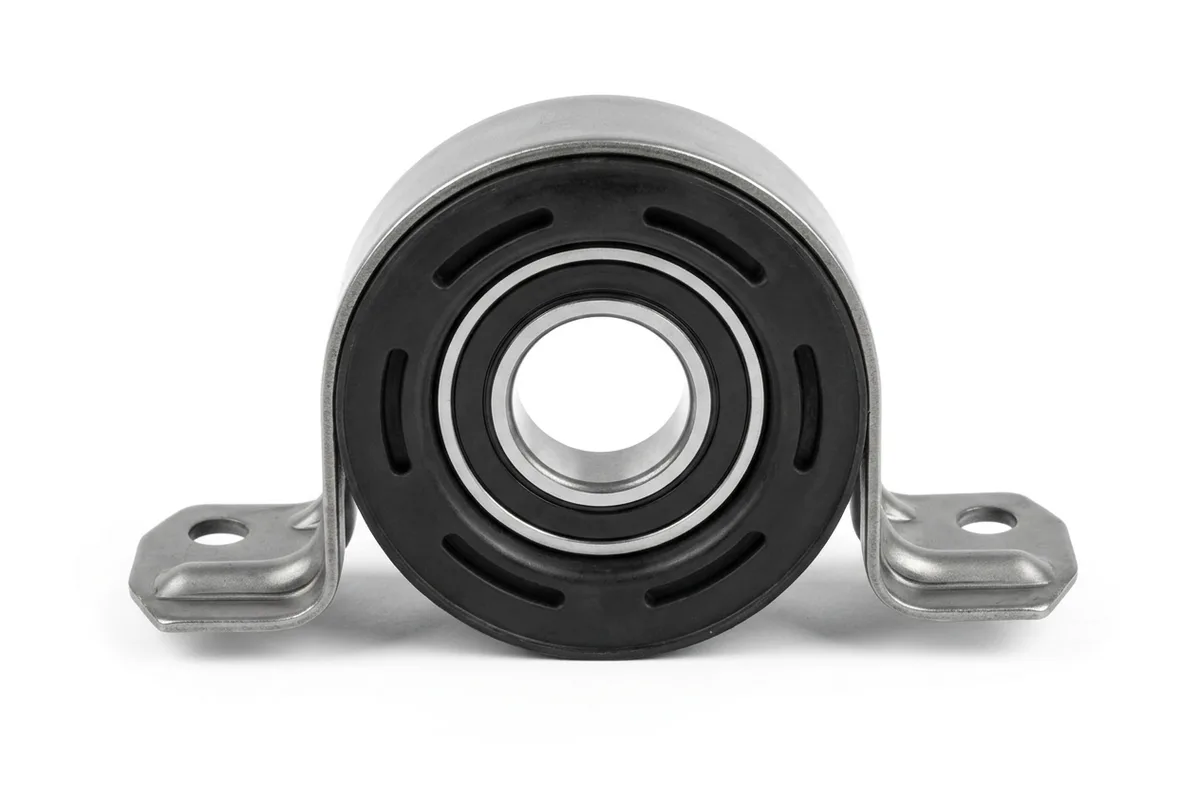
A new propshaft, or just the centre bearing?
Used propshafts and centre support bearings for the Mk1 7L and Mk2 7P Touareg. Tell us the model year and gearbox, and whether the shaft has been running loose, and we will confirm the match.
Get a price →High-pressure fuel pump (Bosch CP4)
Sudden loss of power and limp mode, often with no warning at all, or a car that cranks and will not start. Fault code P0087 is the common one.
The CP4 pump can fail internally and shed fine metal debris, and that debris is then pumped through the entire high-pressure system — rail, lines and every injector. The failure is never contained to the pump.
We have deliberately not put a rand figure on this. The overseas numbers we found are dealer-labour figures that do not transfer to South Africa, and the honest local answer is a live quote from a Bosch diesel centre.
EGR valve and blocked DPF
Repeated DPF warnings, regeneration cycles happening far more often than they should, and limp mode with reduced power. Carbon and soot build up on the EGR valve and in the cooler until the valve sticks or the passages block. Once EGR is not working properly the DPF cannot regenerate, soot accumulates, and the car drops into limp mode — where passive regeneration becomes impossible, so it gets worse.
Get it scanned properly first. An EGR fault, a differential-pressure sensor fault and a genuinely full DPF all light the same warnings and are not the same repair. Cleaning or replacing the EGR valve and cooler, then forcing a regeneration, is the usual route.
Mk1 only: ABS pump and control module
ABS warning light permanently on, ABS and brake lights flashing together, or a BRAKE FAULT, STOP VEHICLE message. In the worst cases a diagnostic tool cannot communicate with the ABS module at all, which makes it look like a wiring fault when it is not.
The MK25 unit fitted to the first-generation car fails internally, most commonly through corrosion of the module’s circuitry. Specialist remanufacturers repair and rebuild these rather than replacing them, which avoids the coding hassle and is much cheaper than a new hydraulic unit. Rule out wheel speed sensors first — they trigger similar warnings for far less money.
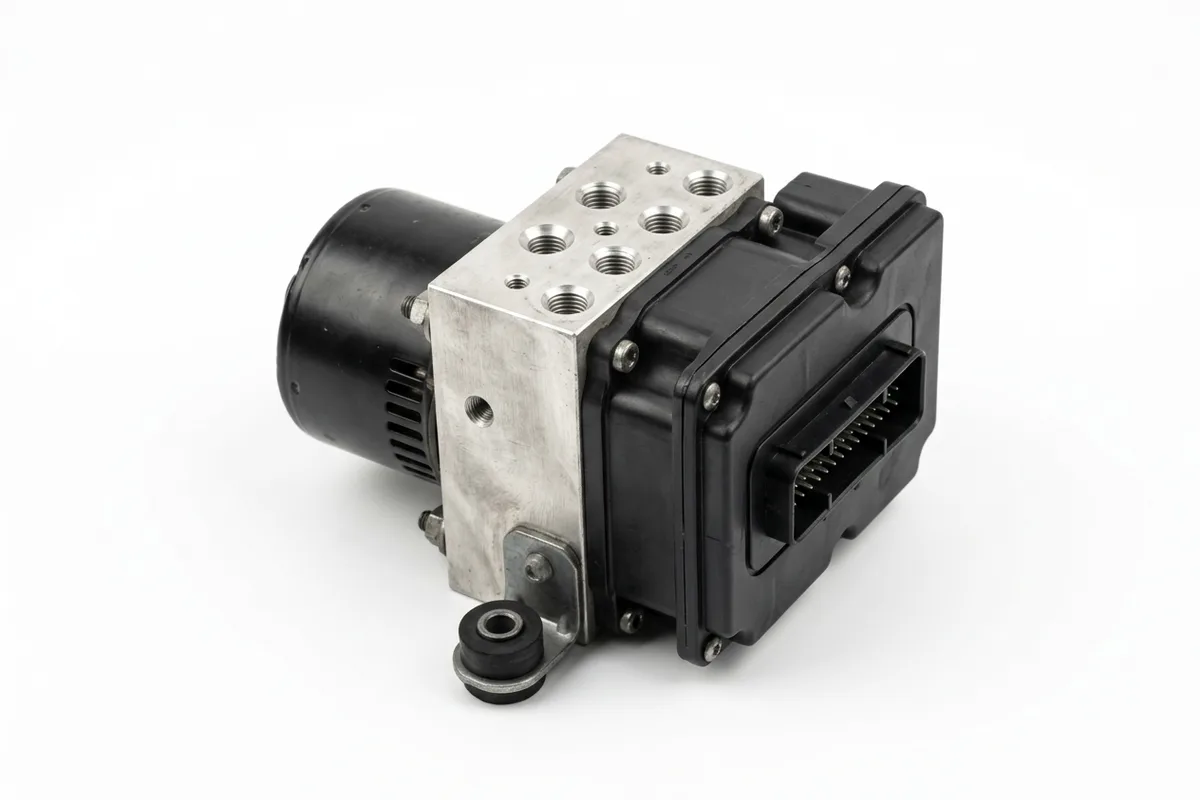
ABS module, or just a wheel speed sensor?
Used ABS pumps and MK25 control units for the Mk1 7L Touareg, plus wheel speed sensors for the cheaper end of the diagnosis. Send us the number off the unit and we will confirm the match.
Get a price →Mk2 only: electronic parking brake
A flashing parking brake light, a parking brake failure message, or a brake that will not engage or will not release.
Two very different causes get confused here. The first is a genuinely failed electric motor in the rear caliper or a damaged harness. The second is a coding problem — the parking brake module’s coding can zero itself after mechanical work on the rear brakes.
Petrol Mk1: fuel filter flange recall
A smell of petrol around or inside the car, or visible weeping near the fuel filter. The flange develops fine cracks and leaks fuel. Volkswagen recalled the affected cars in two waves covering the whole Mk1 petrol production run — this is a formal safety recall, not owner folklore.
If you own a petrol Mk1, have the VIN checked against the recall record. A car that has changed hands several times, or came in as a used import, may never have had the work done. Recall work is carried out free of charge where the campaign applies, though South African applicability should be confirmed with a dealer.
Which years should you avoid?
Honestly? Judge the car, not the year.
There are a lot of “years to avoid” listicles about this model and they contradict each other directly — the same model years appear on both the “avoid” and “most reliable” lists depending on which site you read, and none of them explain their methodology. We are not going to add another unsourced table to that pile.
What the complaint data does show is that 2012 attracts the most owner complaints, followed by 2005 and 2007, and that the early Mk1 cars from roughly 2004 to 2007 carry the most clustered risk — air suspension, propshaft, ABS module and the recalled fuel flange all land on cars that are now eighteen to twenty-two years old here.
The three questions that actually matter when you are standing next to one:
- Does it have air suspension, and does it hold height overnight? Park it, come back in the morning.
- On a 3.0 TDI, is there a documented timing chain history? Start it stone cold and listen for the rattle.
- Is there any unexplained coolant loss? No puddle does not mean no leak.
What we can and cannot price
You will have noticed that six of the faults above have no rand figure against them. That is deliberate.
We could source real South African prices for air suspension work and for a timing chain kit. For the oil cooler job, the high-pressure fuel pump, EGR and DPF work, the ABS module and the parking brake, the only numbers available were British, American or European — and dealer labour overseas tells you nothing useful about what a workshop in Boksburg or Bellville will charge. Converting those into rands would have looked authoritative and been wrong.
If you need a real number, tell us the part, the model year and your VIN and we will quote you on what we actually have.
Getting the parts
Most of these repairs follow the same pattern: the labour costs more than the component, and a new OEM part is a serious fraction of what the car is worth. That is exactly where a good used part makes sense.
Air suspension compressors and struts, propshafts, oil coolers, EGR components, ABS units and parking brake actuators all come off the Touaregs we strip and all move well. Complete engines are available too if a chain or a pump has already done its damage — see what we carry on our used engines page.
The two exceptions worth being straight about: timing chain kits and the high-pressure fuel pump. Fitting used parts there defeats the purpose of the repair, and we will tell you so rather than sell you one.
Frequently asked questions
What are the most common VW Touareg problems?
Why does my VW Touareg air suspension keep failing?
How much does Touareg air suspension repair cost in South Africa?
Is the VW Touareg reliable?
Is the VW Touareg 3.0 TDI reliable?
Which VW Touareg years should I avoid?
Why does my Touareg vibrate or clunk when accelerating?
My Touareg loses coolant but there is no puddle — what is it?
Why is my Touareg parking brake not working?
Are used Touareg parts worth buying in South Africa?
Parts we strip for this job
If this guide has pointed you at a part, these are the pages worth a look. Not sure which one you need? Send us the details and we will work it out with you.